
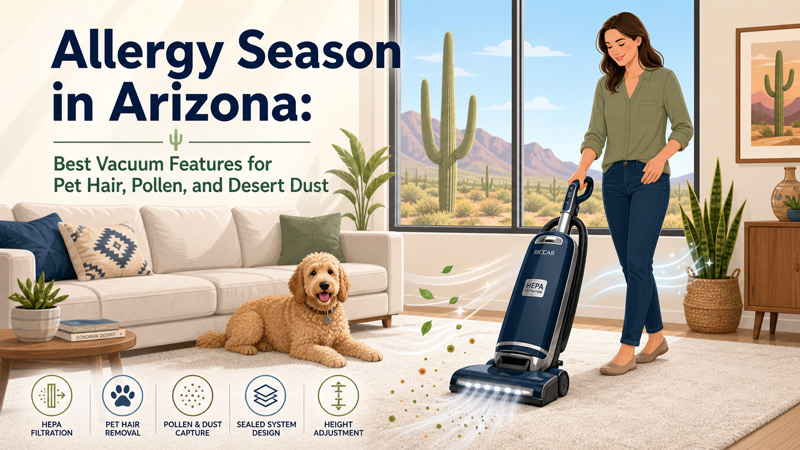
If you live in Arizona, you do not need a weather report to know when allergy season arrives. Your nose, eyes, and throat tell you first. Dry air, desert dust, and seasonal pollen all combine with pet hair and dander to make indoor air feel just as irritating as the air outside. One of the most practical ways to fight back is not just dusting more often, but choosing a vacuum that is actually built for Arizona conditions.
At Sun City Vacuums, we see the same pattern every year. Customers come in during allergy season because their current vacuum is “working,” but they are still sneezing after they clean. The problem is rarely the act of vacuuming itself. It is the features the machine does—or does not—have for dealing with fine particles and pet debris. A good allergy-friendly vacuum is less about gimmicks and more about a combination of solid airflow, effective agitation, and serious filtration.
In this post, we will walk through the key vacuum features that matter most for Arizona allergy sufferers, and how brands like Miele, Riccar, and Sebo build machines that handle pet hair, pollen, and desert dust better than typical big-box models.
Why Arizona Homes Are So Challenging
Arizona homes face a very specific mix of challenges:
- Desert dust: Fine dust finds its way in through doors, windows, vents, shoes, and even on your pets. It settles into carpet, crevices, and upholstery.
- Pollen: Seasonal spikes from trees, grasses, and weeds can easily ride in on clothes and fur or blow in when windows are open.
- Pet hair and dander: Dogs and cats bring outdoor particles inside, and their own dander becomes another allergen source.
- Dry air: In dry climates, small particles stay airborne longer and get stirred up easily when you walk, sit, or vacuum.
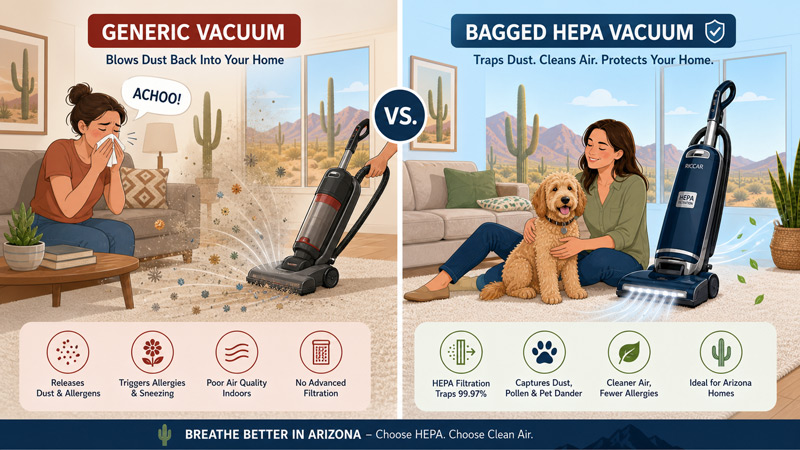
A vacuum that only picks up the “big stuff” but leaks fine dust right back into the air can actually make your home feel worse right after you clean. That is why a combination of the right features matters more than any single spec on a box.
Must-Have Feature #1: Sealed Filtration with HEPA
For allergy sufferers, filtration is non-negotiable. A good allergy-focused vacuum should not act like a dust blower. Instead, it should trap fine particles and keep them in the machine until you are ready to dispose of them.
Key points to look for:
- True HEPA filtration: A certified HEPA filter is designed to capture very small particles that often trigger allergies, including fine dust, pollen, and dander.
- Sealed system: The vacuum’s body, seals, and gaskets should be designed so that air is forced through the filter instead of escaping around it.
- Layered filtration: Multiple stages of pre-filters and bags help protect the main HEPA filter and extend its life.
This is where brands like Miele, Riccar, and Sebo really stand out. They build vacuums as systems—tight seals, quality materials, and filtration designed for long-term allergy performance rather than just hitting a number on a spec sheet. Many of their models pair HEPA-level exhaust filters with high-filtration, multi-layer bags, giving you an extra level of particle capture before air leaves the machine.
Must-Have Feature #2: Bagged Systems for Cleaner Disposal
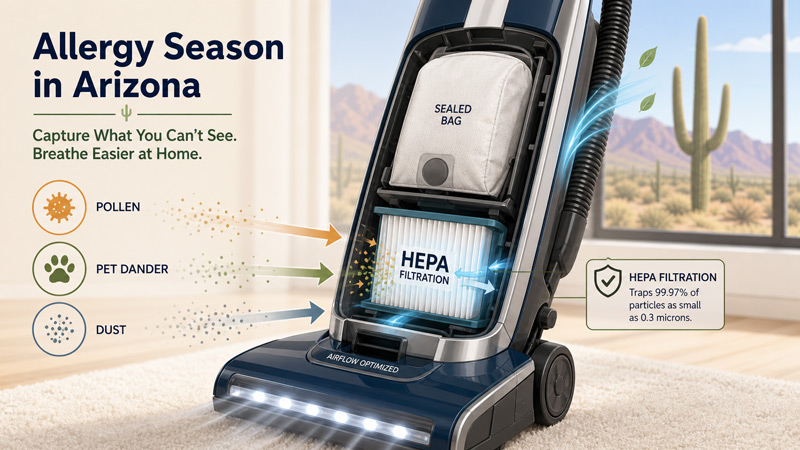
Bagless vacuums are popular because they avoid the cost of bags, but they are not always ideal for allergy sufferers—especially in a dusty state like Arizona. When you empty a bin, it is easy to create a cloud of fine dust right at arm’s length.
Bagged systems offer several advantages:
- Cleaner disposal: You remove the bag, seal or cover the opening, and toss it—less dust escapes back into the room.
- Additional filtration: Quality bags act like another filter layer, catching fine particles and protecting the HEPA filter.
- Less frequent contact with debris: You do not have to scrub out a dust bin or knock caked-on dust loose as often.
Many Miele, Riccar, and Sebo models are bagged by design. Their bags are not flimsy; they are often multi-layer, self-sealing, and designed to maintain airflow as they fill. For an Arizona household with allergies, a well-designed bagged vacuum is usually the more comfortable and hygienic choice.
Must-Have Feature #3: Strong, Consistent Suction and Airflow
In a desert climate, fine dust can work its way deep into carpet fibers and rugs. Pet hair also tangles and embeds in fabric surfaces. To remove these effectively, you need more than a fancy filter—you need strong, steady airflow and a motor that is built for long-term use.
What to look for:
- High-quality motor: A durable motor maintains consistent suction over time, not just when the vacuum is brand new.
- Airflow through the entire cleaning path: Good design ensures air moves smoothly from the floor head, through the hose and body, to the bag or bin and filter.
- Minimal leaks: A machine that holds its seals well does not waste suction through gaps.
The premium motors and engineering in Miele, Riccar, and Sebo vacuums are one of the reasons they often feel more powerful on the floor than their wattage rating alone suggests. In practice, that means more fine dust and pet hair pulled out of carpets and upholstery in fewer passes.
Must-Have Feature #4: Effective Brushrolls and Floor Tools
To capture pet hair and heavier dust from carpets and rugs, you need more than suction; you need agitation. The right brushroll and floor tools help lift hair and dirt so the airflow can carry them away.
Helpful features include:
- Motorized or turbine brush heads: These heads drive bristles into carpet pile, loosening hair and debris.
- Height adjustment: Being able to adjust to different carpet heights and rug thicknesses ensures the brush makes proper contact without bogging down.
- Gentle but effective bristles: You want bristles that agitate fibers without damaging delicate rugs or hard floors.
Many Riccar and Sebo upright models are known for strong, practical brushroll designs that handle pet hair particularly well. Miele offers powered floor heads on canisters and uprights that combine efficient agitation with excellent airflow. The result is cleaner carpet and fewer allergens left behind.
Must-Have Feature #5: Specialized Tools for Pet Hair and Dusty Surfaces
Arizona homes often have a mix of carpet, tile, luxury vinyl, and area rugs, plus lots of fabric surfaces that collect dust and dander. The right onboard tools make a big difference for allergy control.
Look for:
- Pet hair tools: Turbo or powered pet tools help remove hair and dander from stairs, furniture, and car interiors.
- Upholstery and mattress tools: Narrow, fabric-friendly attachments let you clean sofas, chairs, cushions, and mattresses—major allergen reservoirs.
- Dusting brushes: Soft bristle brushes help you dust vents, blinds, baseboards, and fans while the vacuum captures particles instead of just spreading them.
Brands like Miele, Riccar, and Sebo usually offer a wide range of purpose-built tools that integrate cleanly with their machines, rather than one generic tool that is expected to do everything. For allergy sufferers, that means you can reach and clean the places where dust and pet hair really accumulate.
Must-Have Feature #6: Easy, Hygienic Maintenance
A vacuum designed for allergy season should not require complicated or messy maintenance. The easier it is to keep your machine in top shape, the better it will perform against pet hair, pollen, and dust.
Helpful design details:
- Simple bag changes: Bags that slide out and seal automatically are ideal for people who do not want to handle dust directly.
- Accessible filters: Filters that are easy to reach, inspect, and replace encourage you to maintain them on schedule.
- Tangle-resistant brushrolls: Features that help reduce hair wrapping around the roller make it easier to keep your floor head efficient.
One of the reasons many homeowners stay loyal to Miele, Riccar, and Sebo is that their machines are built with real-world maintenance in mind. Well-thought-out access panels, clear filter locations, and quality parts make it much easier to keep performance high season after season.
How Often Should You Vacuum During Arizona Allergy Season?
The best features in the world will not help if your vacuum stays in the closet. During peak allergy seasons in Arizona:
- High-traffic areas and main living spaces often benefit from vacuuming two to three times per week.
- Bedrooms, especially for allergy sufferers, should ideally be vacuumed at least once a week, along with regular washing of bedding.
- Upholstered furniture, rugs, and pet zones may need extra attention, particularly if pets shed heavily or go outdoors frequently.
Using your vacuum consistently, with the right tools and settings, helps keep the overall allergen load in your home down so your filters and bags are dealing with manageable amounts of dust instead of trying to catch up.
Putting It All Together: Choosing the Right Vacuum for Your Home
When you combine desert dust, seasonal pollen, and pets, you do not need just “any” vacuum. You need:
- Sealed, HEPA-level filtration
- A quality bagged system for cleaner disposal
- Strong, consistent suction and airflow
- Effective brushrolls and floor tools
- Specialized attachments for pet hair and dusty surfaces
- Simple, hygienic maintenance
That is exactly the kind of design focus that brands like Miele, Riccar, and Sebo bring to the table. Instead of chasing the latest gimmick, they concentrate on the features that matter most for real homes and real allergy sufferers.
If you are in Sun City or the surrounding areas and you are not sure which model fits your floors, pets, and budget, visiting a specialty shop like Sun City Vacuums is the easiest way to cut through the guesswork. You can see how different tools work on actual surfaces, compare filtration options, and get guidance based on real experience with Arizona homes.